Choose your viewer type
Set your role once and we will tailor the guidance across SIP University.
Imagine building with LEGO...
Start with the basics. Structural Insulated Panels (SIPs) are a high-performance building system for residential and light commercial construction.
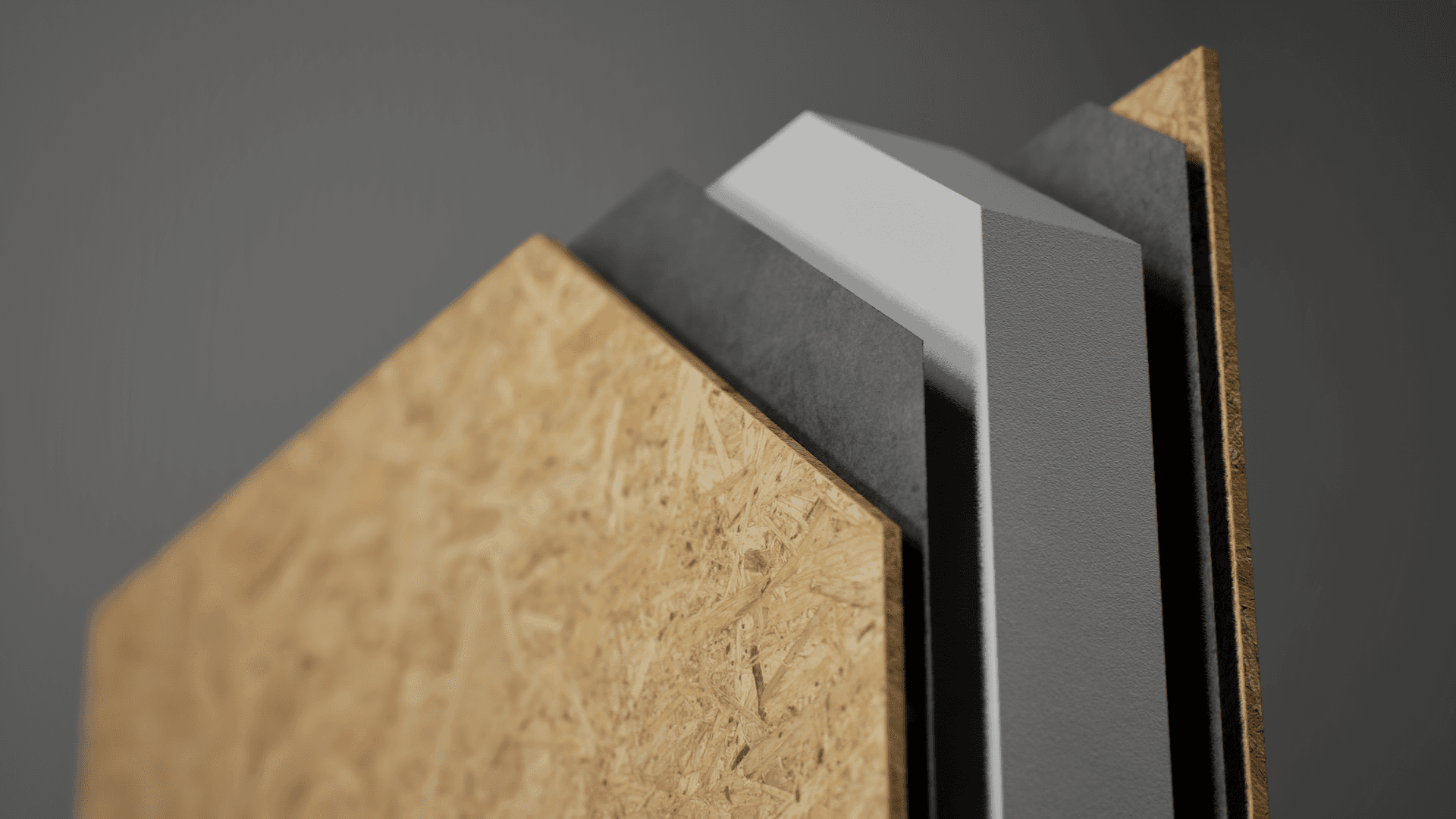
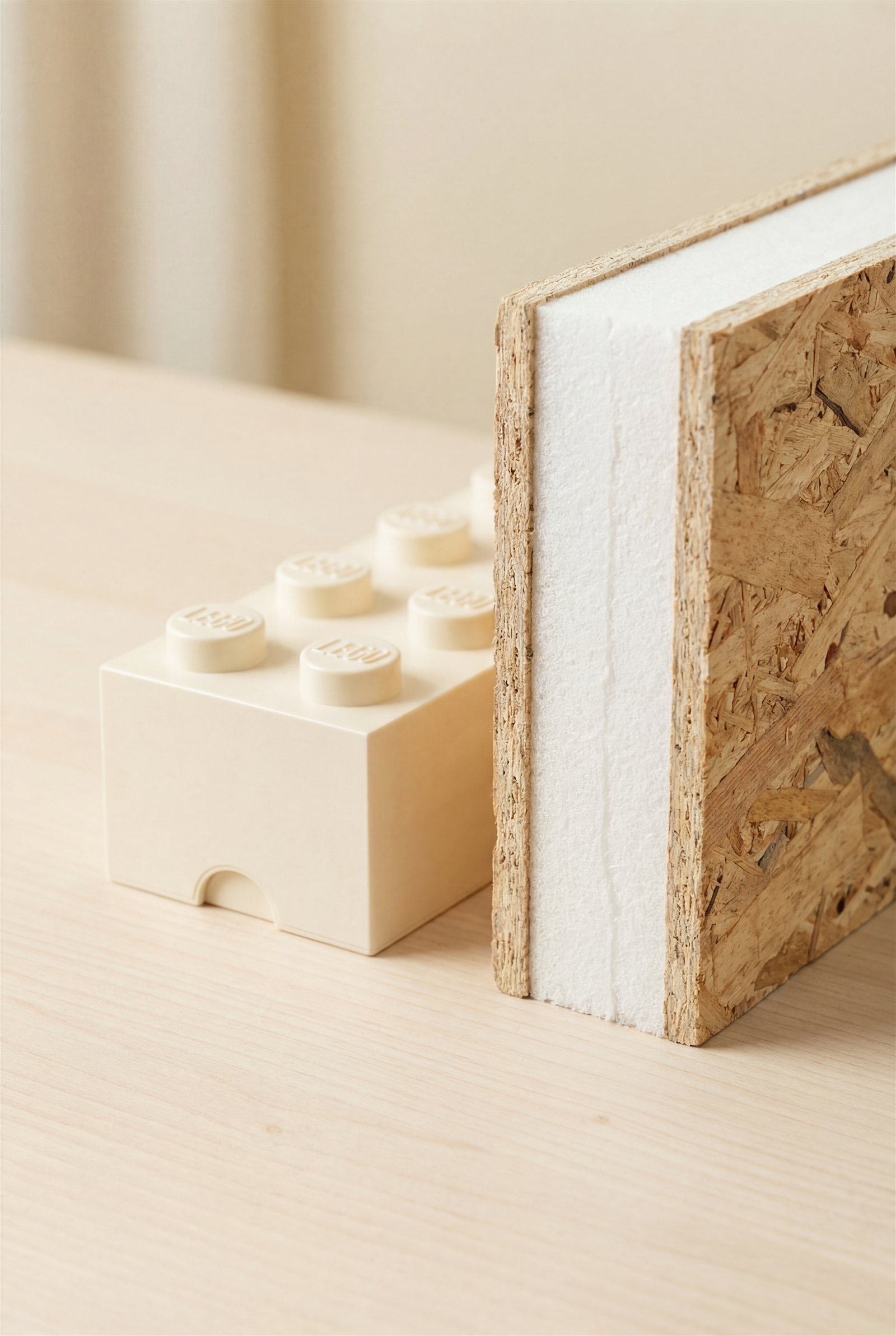
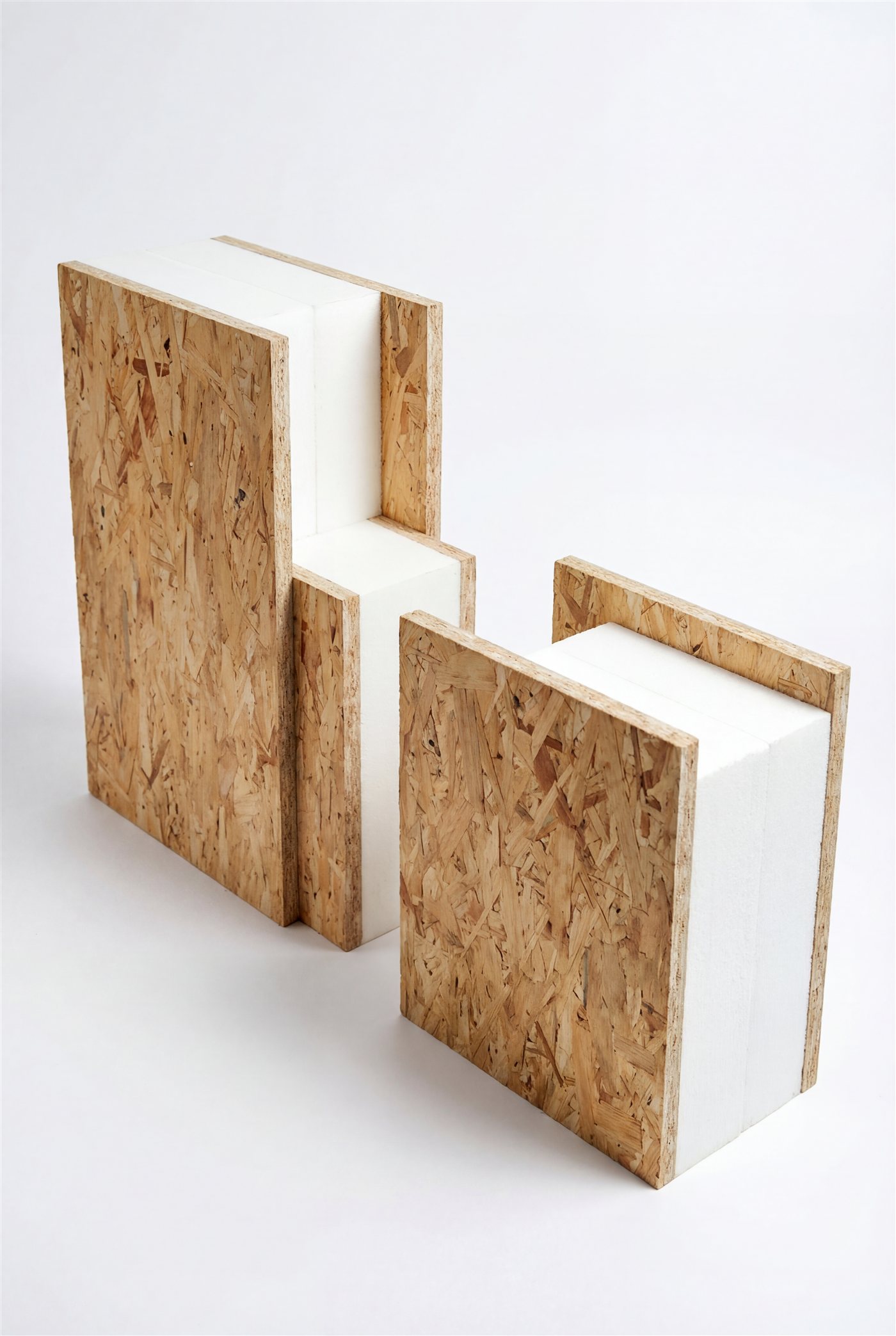
The panels consist of an insulating foam core sandwiched between two structural facings, typically Oriented Strand Board (OSB).
Think of SIPs as structural panels that replace studs and insulation in one factory-made layer. In the UK that means fewer layers, fewer trades on the shell, and a faster route to a weather-tight build.
Why this matters to you
Knowing what SIPs are makes the rest of the course easier to follow and helps you judge if the system fits your project.
Structural
SIPs are load-bearing. One kit replaces the frame and insulation, so there are fewer trades, fewer site handoffs, and a faster, cleaner shell for turnkey clients.
Insulated
The insulation is built-in, so the home is warm and draft-free sooner. For turnkey customers that means a quicker move-in, lower running costs, and less disruption on site.
Why the UK is switching to SIPs
It comes down to physics. Traditional construction relies on multiple layers to achieve thermal performance. SIPs achieve it in one.
UK energy targets and wet-weather windows push builders toward faster, tighter shells. SIPs deliver insulation continuity with fewer junctions to manage.
A Brief History
SIPs aren't new. They were actually developed in the 1930s at the Forest Products Laboratory in Madison, Wisconsin.
Frank Lloyd Wright used a form of them in his Usonian houses. But it wasn't until the 2000s that the UK market really woke up to them, driven by stricter energy targets (Part L) and the need for rapid housing.
Timeline of Innovation
- 1930sConcept developed in US Forest Products Lab.
- 1980sFirst mainstream adoption in US residential.
- 2000sUK adoption begins for self-builds.
- 2025UltraSIPS pushes performance to 0.15 W/m2K.
SIPs vs Brick & Block
The traditional way vs the modern way. Fight!
Speed
SIPs: Weather-tight shell in 3-5 days.
Brick: Weeks, dependent on British weather.
Space
SIPs: Thinner walls for same U-value = more floor space.
Brick: Thick cavities eat up your garden.
Precision
SIPs: Manufactured to +/- 2mm in a factory.
Brick: Relies on the skill of the brickie on a Friday afternoon.
Ease of Assembly
The "Slide & Lock" System
We use a Spline Connection. A thin strip of OSB (or insulated SIP spline) fits into the routed grooves of two vertically standing panels.
- Apply expanding adhesive.
- Insert the spline.
- Slide the panel.
- Nail to lock.
Common Myths Busted
"They rot, don't they?"
No. The OSB facings are treated, and when properly wrapped in a breather membrane (like Tyvek) and clad, they last as long as traditional timber frame—60+ years easily.
"Can I hang a TV on it?"
Yes. Unlike plasterboard stud walls where you hunt for a stud, the entire wall is structural OSB. Screw into it anywhere. You could hang a gym on it.