Personalize this lesson
Choose your viewer type
Set your role once and we will tailor the guidance across SIP University.
Structural Insulated Panels (SIPs) are a modern method of construction (MMC) that offer many benefits, but they aren't without their challenges.
Use this as a UK decision filter: SIPs trade a modest upfront premium for speed, comfort, and tighter quality control.
Why this matters to you
Seeing the trade-offs early helps you plan around cost, lead time, and on-site constraints.
Pros
- Energy Efficiency: Exceptional thermal performance and airtightness. And why is that a pro? Lower running costs, better comfort, and an easier route to meeting Part L targets when detailed correctly.
- Speed: Can reduce on-site build time by up to 60%. And why is that a pro? Faster to a weathertight shell means fewer weather delays and often lower site prelims and labour time.
- Space: Thinner walls for the same U-value compared to traditional masonry. And why is that a pro? You can gain usable internal floor area (or keep the same space with a smaller footprint).
- Waste: Factory-controlled manufacturing reduces on-site waste. And why is that a pro? Less skip cost, a cleaner site, and fewer materials left over.
Cons
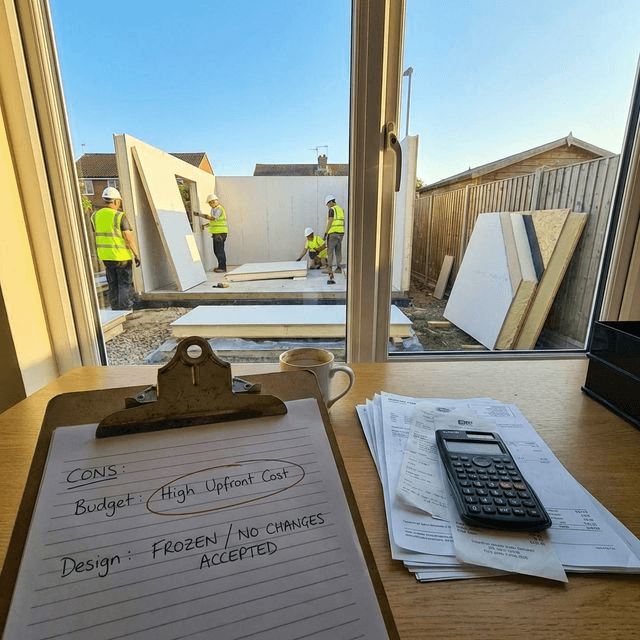
- Upfront Cost: Can be 5-10% more expensive than timber frame (though saved in labor).
- Design Freeze: Changes are difficult once the panels are manufactured.
- Mortgage: While generally accepted, some lenders have specific requirements for MMC.
Most downsides are manageable with early design freeze, clear scope, and a dry storage plan.
Was this useful?